
Emergency response is visible. Rescue teams, helicopters, supplies, funding announcements. That is the part of disaster everyone sees — and it is the part America does relatively well.
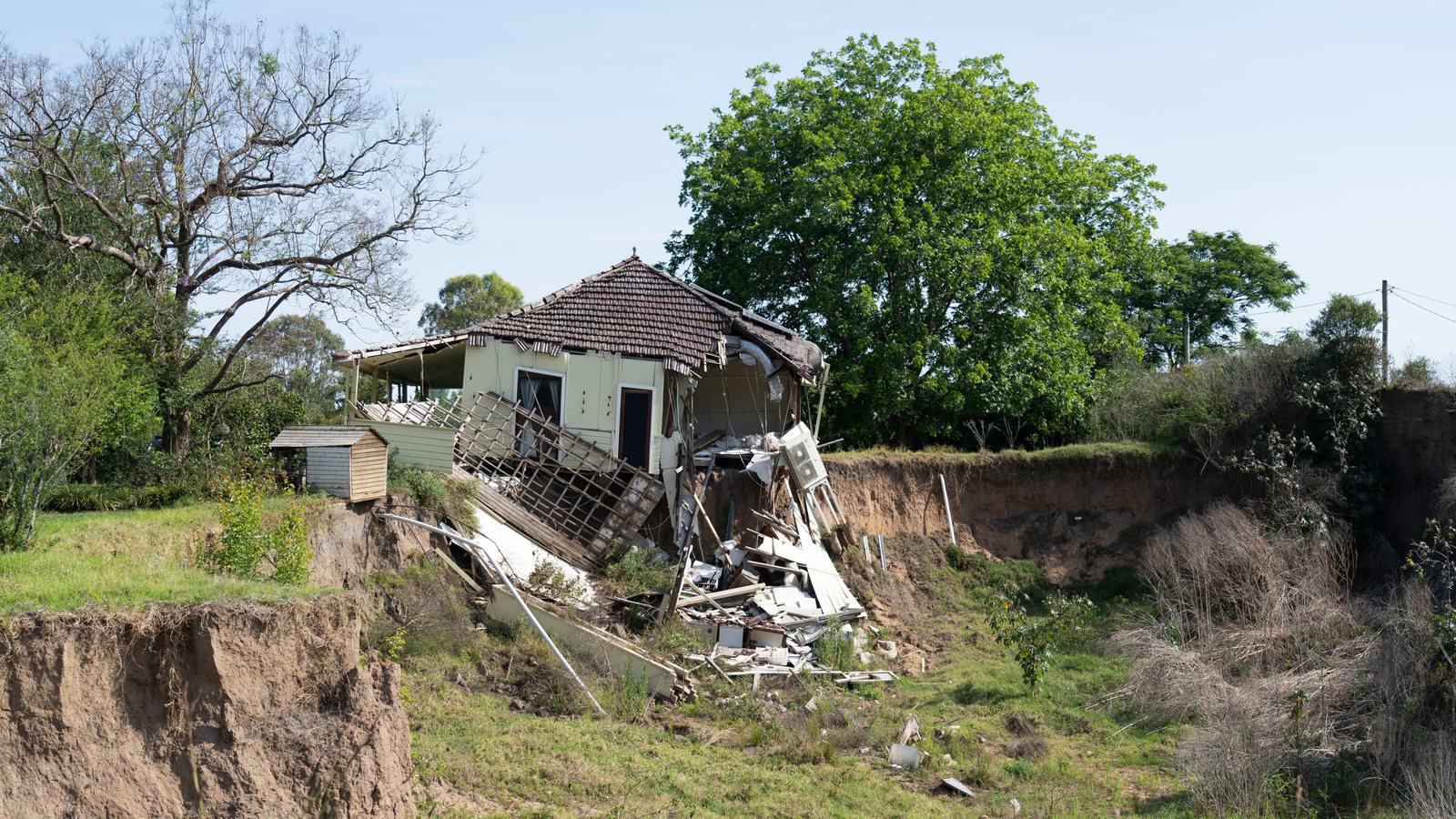
The real disaster does not happen during the storm. It happens after. After the cameras leave. After the volunteers go home. After the systems meant to help people begin to stall and even fall apart.
I call it the recovery cliff, and I have watched communities go over it for more than thirty years — from Hurricane Andrew in 1992 to Hurricane Helene in Asheville to Hurricane Isaias in the Florida Panhandle three weeks ago.
The cliff is real, and it has a date
Real recovery begins around day fourteen or fifteen, after the rapid response ends. The recovery phase lasts months, sometimes years. In major disasters, full recovery can take three years or more.
Long before then, most of the help has gone over the cliff.
In Asheville after Helene, the FEMA recovery never materialized the way people were promised. Federal agencies waited on the State of North Carolina. The state waited on federal direction. While governments waited, people who needed the help most did not get the help they needed.
After Isaias, the pattern repeated in miniature: an emergency declaration on October 9 covered federal response costs at 75 percent — but opened nothing for households. A major disaster declaration request went in on October 16. It took until October 27 for FEMA-4955-DR to sign Public Assistance, and until October 29 for Individual Assistance to be approved for 8 counties — twenty days from landfall to household-aid approval, with in-person registration points only opening in Escambia on November 1. The gap between "the storm is over" and "help is available" is where people fall.
The problem is structural, not personal
Three structural failures drive the cliff:
1. Response and recovery are run as if they were the same job. They are not. Response is measured in hours and lives saved. Recovery is measured in months and homes rebuilt, claims paid, businesses reopened, and children back in school. Different skills, different timelines, different accountability — but we hand recovery to response organizations and wonder why it stalls.
2. The money arrives in the wrong order. Insurance adjusters fight over wind versus flood while roofs stay open to the rain. Public Assistance reimburses governments only after damage assessments, thresholds, and declarations. Individual Assistance cannot even be applied for until a declaration is signed. Families with no savings cannot wait for a process designed around paperwork.
3. Territories and rural communities fall further. Puerto Rico, the U.S. Virgin Islands, and rural counties across the Southeast face the same cliff with thinner infrastructure, fewer adjusters, and longer supply lines. When the national attention moves on, their recovery does not speed up — it slows down, because the resources were never sized for the long middle in the first place.
What the long middle actually needs
Recovery is not a single program. It is a sequence, and every phase needs an owner:
- Days 1–14: stabilize. Power, water, shelter, safety. This is where government and first responders excel.
- Days 14–90: document and decide. Damage assessments, insurance claims filed correctly the first time, FEMA applications submitted the day they open, temporary housing that does not become permanent limbo. This is where most families lose the most ground — and where trained, on-the-ground professionals matter most.
- Months 3–36: rebuild stronger. Not the same roof that failed, not the same floodplain gamble. Insulated concrete forms, elevated systems, hardened roofs, and building codes enforced as if the next storm were already scheduled — because it is.
The through-line is simple: someone has to stay after the cameras leave. That is the single purpose of R3SULTS — to be present before, during, and after, so that no family, and no community, goes over the cliff alone.
The question for all of us
Every disaster in America ends the same way twice: once when the wind stops, and once when the last family is home. We celebrate the first ending. We forget the second.
The next storm is already forming. The question is not whether we will respond — we will. The question is whether, this time, we will still be there on day fifteen, day ninety, and day nine hundred.
Respond. Recover. Rebuild. In that order, and without letting go in between.
Where to find help
If you or your community need help with disaster relief, recovery, or preparedness, you can find solutions at R3sults.com and R3sults.org. Reach him at hv.tremble@r3sults.com or by phone: Business +1 954-231-1750, Mobile +1 347-874-6296.
Available for consultations, operational support, crisis problem-solving, public speaking, and podcast appearances. Serving all tiers of government, commercial enterprises, and residential communities in disaster relief management and preparedness. From local community planning to large-scale federal response: no job is too big or too small.
Herbert V. Tremble is the founding principal of R3SULTS, a disaster management technology ecosystem, and has worked as a consultant, contractor, and subcontractor on disaster response and recovery for more than three decades, through Iron Butterfly Group LLC and Iron Butterfly Consultants LLC.
About the author
Herbert V. Tremble
Founding Principal, R3SULTS
- #disaster recovery
- #fema
- #hurricane recovery